Why Does AI Dubbing Sound Robotic? (And How to Actually Fix It)
AI dubbing sounds robotic when voice identity, emotion, and pacing don't match the original speaker. Here's why it happens and how to fix each one before you publish.
The short answer
AI dubbing sounds robotic when the voice gets the words right but loses the performance — flat emotion, mistimed pacing, and a generic voice that doesn't match the original speaker. Fix those three things and most "robotic" dubbing problems disappear.
If you've tried dubbing a video with an AI tool and cringed at the result, you're not imagining it. The issue almost never comes from bad translation. It comes from treating dubbing as a text-to-speech job instead of a performance job.
Why does AI dubbing sound robotic in the first place?
Three things usually go wrong at once, and any one of them is enough to make a dub feel fake.
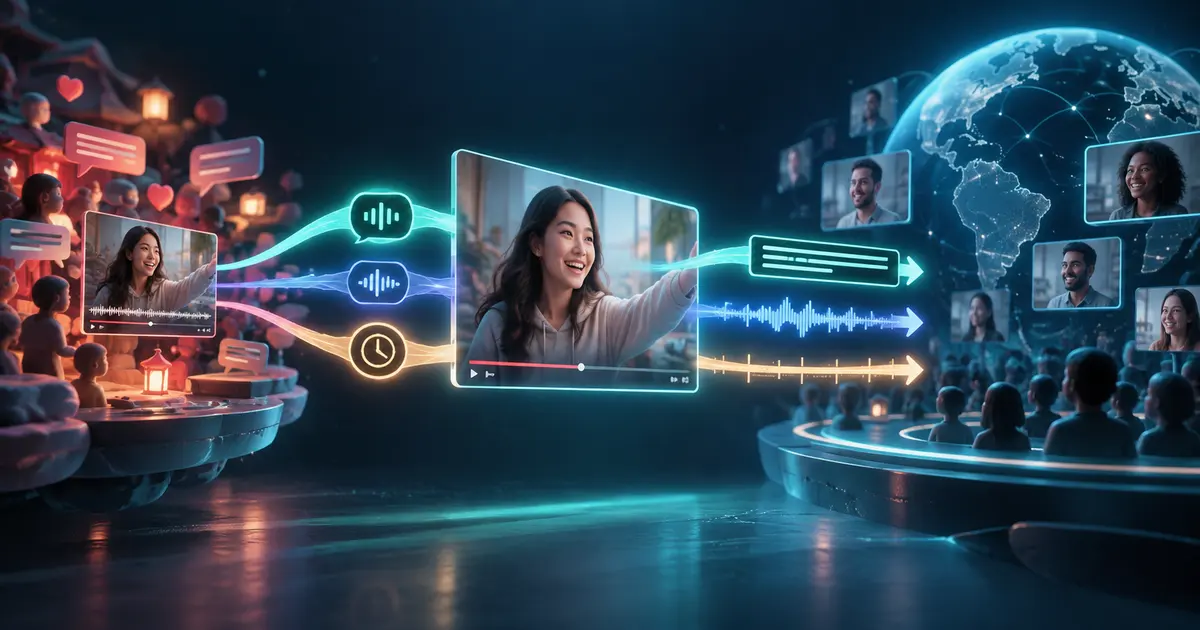
The voice doesn't match the speaker. Many dubbing tools default to a generic AI voice instead of the original speaker's own voice. Even a technically clean voice sounds "off" the moment viewers notice it's not the person they were just watching.
The emotion gets flattened. A generic text-to-speech engine reads the translated script correctly, but it hits every line with roughly the same energy. When the original speaker gets excited, sarcastic, or quiet, the dub needs to carry that same shift — otherwise the performance goes flat even though the words are accurate.
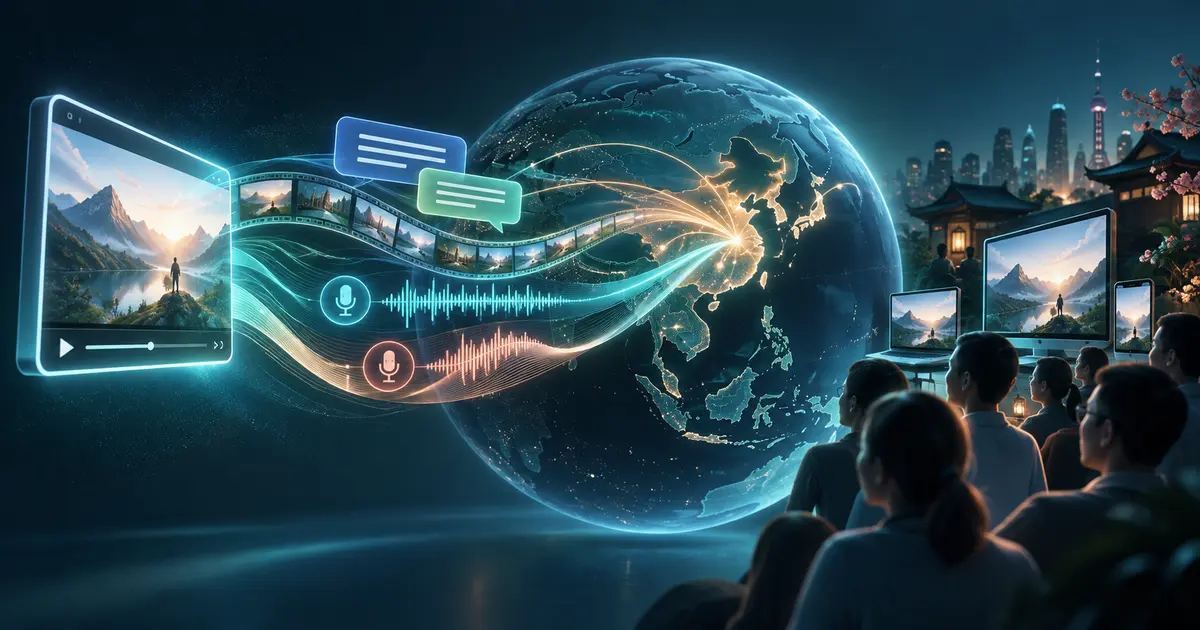
The timing doesn't fit. Translations are rarely the same length as the source language. A sentence that takes 3 seconds in English might take 4 in Spanish. If a tool crams the translation into the original time slot or stretches it to fill space, the rhythm breaks, and — if there's video — the lip movements stop matching the audio.
Generic text-to-speech vs. voice cloning: what's the real difference?
This is the biggest factor in making robotic dubs sound more natural, so it's worth being specific about what each approach actually does.
| Generic TTS | Voice Cloning | |
|---|---|---|
| Voice identity | A stock AI voice, not the speaker's own | Trained on the speaker's own voice sample |
| Best for | Narration, IVR, accessibility tools where any clear voice works | Creator content where viewers already know the speaker's voice |
| Consistency | Very reliable, same voice every time | Depends on sample quality and length |
| Processing time | Fast | Slightly longer, since it has to model the voice first |
If you're dubbing a tutorial where nobody knows your face or voice yet, generic TTS is fine — it's fast and predictable. If you're dubbing content for an audience that already follows you, voice cloning is what keeps the dub from feeling like someone else took over your channel.
How do you fix AI dubbing timing and lip-sync issues?
Timing problems are the most technical part of this, but they're also the most fixable once you know what to check.
Look for a tool that adjusts pacing based on the translated script's actual length, rather than forcing it into the original clip's exact runtime. Some tools also let you nudge individual segments — slowing down a rushed line or adding a beat of silence where the original speaker paused.
If you're publishing a video, not just audio, lip-sync matters as much as pacing. A dub can be perfectly timed to the scene and still look wrong if the mouth keeps moving after the audio stops. Tools built around video localization — rather than pure text-to-speech — usually handle this as a distinct step, syncing mouth movement to the new audio track once the translation and dubbed audio are ready.
Can AI dubbing actually preserve emotion?
To an extent, yes — but it depends heavily on the underlying voice model, not just the translation quality. Voice cloning systems that are trained on more than a few seconds of clean audio tend to carry more of the speaker's natural pitch range and delivery style into the dubbed version.
A quick way to test any dubbing tool: find a moment in your source video where your tone clearly shifts — from explaining something calmly to getting genuinely excited about it. Dub that clip. If the shift disappears in the translated version, the tool is treating your voice as flat data rather than a performance.
A practical checklist before you publish a dubbed video
- Use voice cloning instead of a generic voice if your audience already knows what you sound like.
- Check at least one moment where the speaker's emotion clearly shifts, not just the overall clarity.
- Confirm the pacing matches the translated script length, not the original runtime.
- If it's video, verify lip movement against the new audio, not just the old one.
- Listen with headphones once before publishing — problems that are easy to miss on laptop or phone speakers often become obvious on headphones.
VoxSail handles these checks in one workflow: it separates vocals from the background audio, transcribes and translates the script, matches the original speaker's emotion and tone by default when generating the dub, offers an optional cloned voice, and can add lip-sync afterward — rather than bolting a generic TTS voice onto a translated subtitle file. If you're localizing creator content where viewers already know your voice, that distinction is usually the difference between a dub that sounds like you and one that sounds like a stranger read your script.
Frequently asked questions
Why does my AI-dubbed video sound worse than the original?
Usually because the tool used a generic voice instead of cloning the original speaker's voice, or because the translated audio was stretched or compressed to fit the original timing instead of being paced naturally.
Is voice cloning better than text-to-speech for dubbing?
For creator content where the audience already knows the speaker's voice, yes. Generic TTS is fine for narration or content whose audience isn't already familiar with the speaker's voice.
Can AI dubbing match lip movements to translated audio?
Some tools handle this as a separate lip-sync step after translation and voicing, adjusting mouth movement in the video to match the new audio track's timing and phonemes.
How much sample audio does AI need to clone a voice well?
More clean, varied audio generally produces a more natural clone, though exact requirements vary by tool. A short, noisy clip will produce a rougher result than a longer sample recorded in a quiet room.
Does AI dubbing work for every language?
Language coverage varies by tool. Timing and rhythm differences between languages (for example, a language with a longer average sentence length) also affect how natural the pacing ends up sounding.
Is AI dubbing good enough to fully replace human voice actors?
For most creator use cases — tutorials, vlogs, explainer content — modern AI dubbing with voice cloning is close enough that casual viewers often don't notice. For high-stakes work like film or major ad campaigns, many teams still use AI as a first pass and bring in human review.